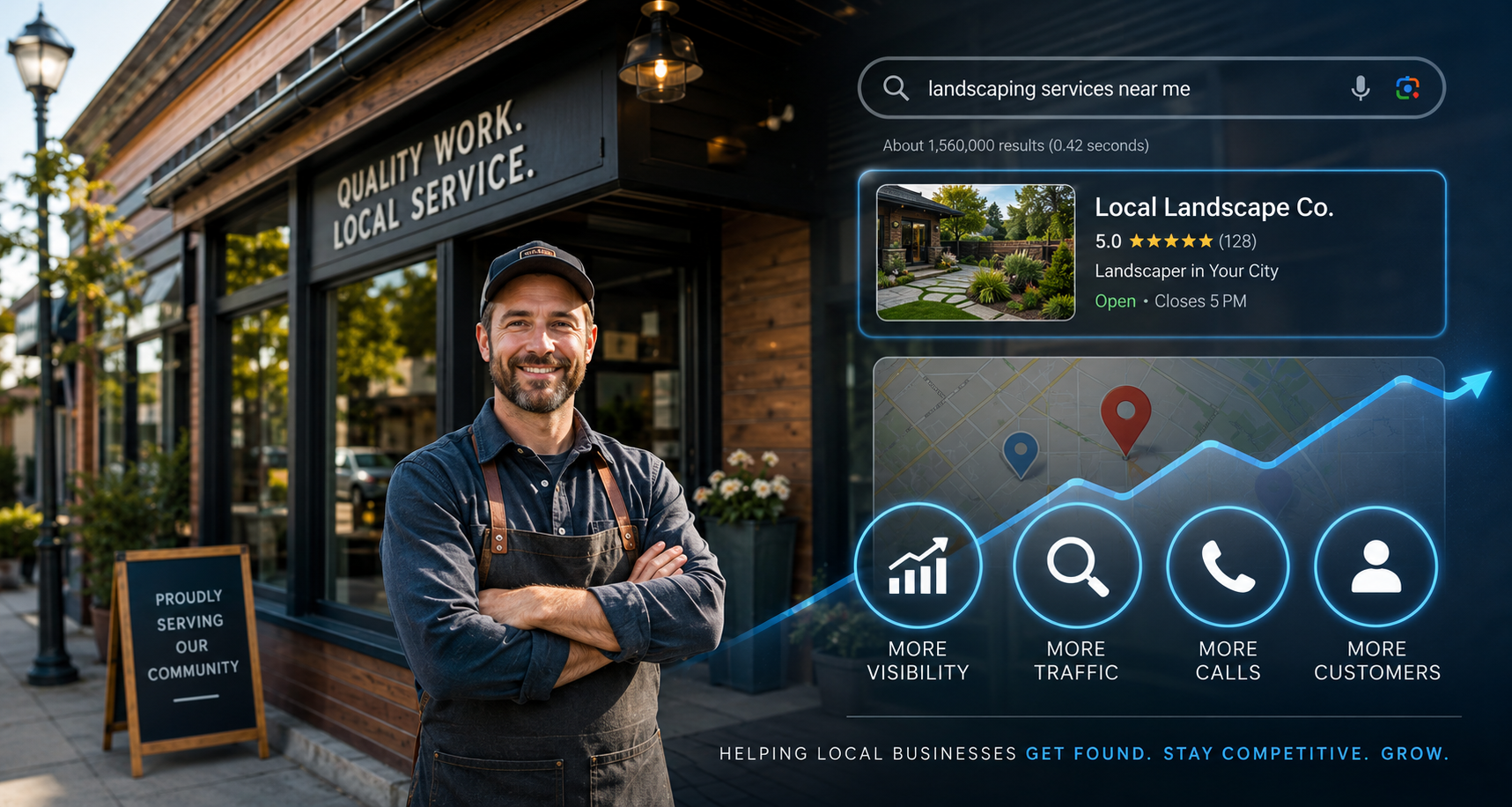
If you have a website, you probably want people to find it.
That sounds simple, but showing up in search results involves more than simply building a website and waiting for visitors to arrive.
Search engines need to understand what your business does, which searches you are relevant for, and whether your website provides a useful experience for the people who find it.
That is where SEO comes in.
SEO stands for Search Engine Optimization. It is the process of improving your website and online presence so search engines can better understand your business and connect you with people actively looking for what you offer.
The goal is not simply to get more traffic.
The goal is to get more of the right traffic.
How Search Engines Work
When someone searches for something on Google, the search engine has to determine which results are most useful.
It considers many factors, including:
- What the page is about
- Whether the content answers the searcher's question
- How relevant the website is to the search
- Whether the business appears trustworthy
- How well the website works on mobile devices
- How quickly the page loads
- Whether other reputable websites reference the business
- Where the searcher is located
- What the searcher is actually trying to accomplish
Search engines are constantly trying to answer one basic question:
Which result is most likely to help this person?
Effective SEO helps your business make that answer easier to find.
SEO Is More Than Keywords
One of the biggest misconceptions about SEO is that it simply means adding keywords to a webpage.
Keywords are important, but modern SEO is much broader than repeating phrases throughout your content.
For example, a landscaping company might want to appear for searches such as:
- Landscaping services near me
- Landscape design
- Lawn installation
- Retaining wall contractor
- Commercial landscaping services
Simply placing those phrases on a webpage does not automatically make that page valuable.
Search engines also need to understand:
- What services the company actually provides
- Where the company operates
- Who the services are intended for
- Whether the website provides useful information
- Whether the business appears legitimate and trustworthy
SEO is about building that complete picture.
The Three Major Areas of SEO
SEO is often divided into three primary areas: technical SEO, on-page SEO, and off-page SEO.
All three work together.
Technical SEO
Technical SEO focuses on the foundation of your website.
A website can look excellent to a visitor and still have technical problems that make it difficult for search engines to crawl, understand, and index.
Technical SEO may include:
- Website performance
- Mobile responsiveness
- Crawlability and indexing
- Website structure
- Internal linking
- Metadata
- Structured data
- Secure HTTPS connections
- Broken links
- Redirects
- Image optimization
This is one reason SEO and web development are closely connected.
A technically sound website gives search engines a better foundation to work with while providing visitors with a better experience.
On-Page SEO
On-page SEO focuses on the content and structure of individual pages.
Every page on your website should have a purpose.
A service page should clearly explain a service. A location page should explain where you operate. An educational article should answer a question or provide useful information.
On-page SEO can include:
- Page titles
- Meta descriptions
- Headings
- Page content
- Image alt text
- Internal links
- Service descriptions
- Location information
- Search intent
The most important question is:
Does this page clearly answer what the visitor is looking for?
Off-Page SEO
Off-page SEO focuses on signals that exist outside your website.
This may include:
- Business directory listings
- Industry-specific directories
- Local citations
- Links from other websites
- Digital PR
- Reviews
- Brand mentions
- Local business information
For local businesses, consistency is particularly important.
Your business name, address, phone number, website, and other information should be accurate and consistent across the places where your business appears online.
Local SEO: Getting Found in Your Service Area
For many small businesses, local SEO is one of the most valuable parts of an online marketing strategy.
If you serve a specific area, you want to be visible when people in that area search for your services.
For example:
- “web designer near me”
- “small engine repair Sandpoint”
- “roofing contractor in [city]”
- “landscaping services near me”
Local SEO helps search engines connect your business with geographic searches.
This can involve:
- Your website
- Your Google Business Profile
- Local business directories
- Customer reviews
- Location-specific content
- Consistent business information
- Local relevance and authority
Your website and your Google Business Profile should work together.
Your website provides depth and information about your business. Your business profile helps people discover you through local search and maps.
SEO Is About Search Intent
A successful SEO strategy starts with understanding why someone is searching.
Consider these searches:
“What is SEO?”
This person is looking for information.
“SEO consultant near me”
This person may be looking for a service provider.
“How much does SEO cost?”
This person may be researching pricing and comparing options.
These searches have different intentions.
A good SEO strategy does not simply target keywords. It creates the right content and pages for the different questions people ask throughout the buying process.
Why Your Website Matters to SEO
Your website is often the central hub of your online presence.
Social media profiles can change. Advertising campaigns can stop. Third-party platforms can change their algorithms.
Your website is an asset that you control.
A strong website should:
- Clearly explain what your business does
- Make it easy to contact you
- Work well on mobile devices
- Load quickly
- Provide useful information
- Make your services easy to understand
- Build trust
- Support your broader online presence
A website should not just exist.
It should help your business accomplish something.
How Long Does SEO Take?
SEO is a long-term process.
Some improvements can produce relatively quick results, particularly when a website has obvious technical problems or missing information.
Other results take longer.
Search engines need time to crawl changes, evaluate content, understand your business, and determine how your website compares with other websites competing for the same searches.
The timeline can depend on:
- Your industry
- Your location
- Your competition
- The condition of your existing website
- The quality of your content
- Your website's authority
- The search terms you are targeting
There is no honest SEO strategy that can guarantee a specific ranking on a specific date.
Good SEO is about building a stronger, more useful, and more trustworthy online presence over time.
Good SEO Starts with a Good Business Foundation
SEO cannot fix every business problem.
If your website is attracting the right visitors but your services are unclear, your pricing is confusing, or your contact process is difficult, more traffic may not solve the problem.
The best SEO strategy connects your online presence to the actual way your business operates.
That means understanding:
- What you sell
- Who you serve
- Where you operate
- What makes you different
- What questions your customers ask
- What actions you want visitors to take
The best-performing websites are not built for search engines alone.
They are built for people first, while making it easy for search engines to understand the value those websites provide.
So, What Is SEO?
SEO is the ongoing process of making your business easier to understand, discover, and trust online.
It combines:
- Technical website development
- Content strategy
- Search intent
- Local visibility
- Website performance
- Business information
- Authority and trust
The goal is not to manipulate search engines.
The goal is to build a better online presence that deserves to be found.
At Full-Stack John, SEO is approached as part of the larger digital operation of your business. Your website, content, technical foundation, local visibility, and customer journey should all work together.
Because getting found is only the first step.
The real goal is helping the right customer understand what you do—and giving them a clear reason to contact you.
Your website should work harder for your business.
Full-Stack John helps businesses build, maintain, and improve the digital systems that support their growth.
Start a Project